How to Study for a Chemistry Test in Two Weeks
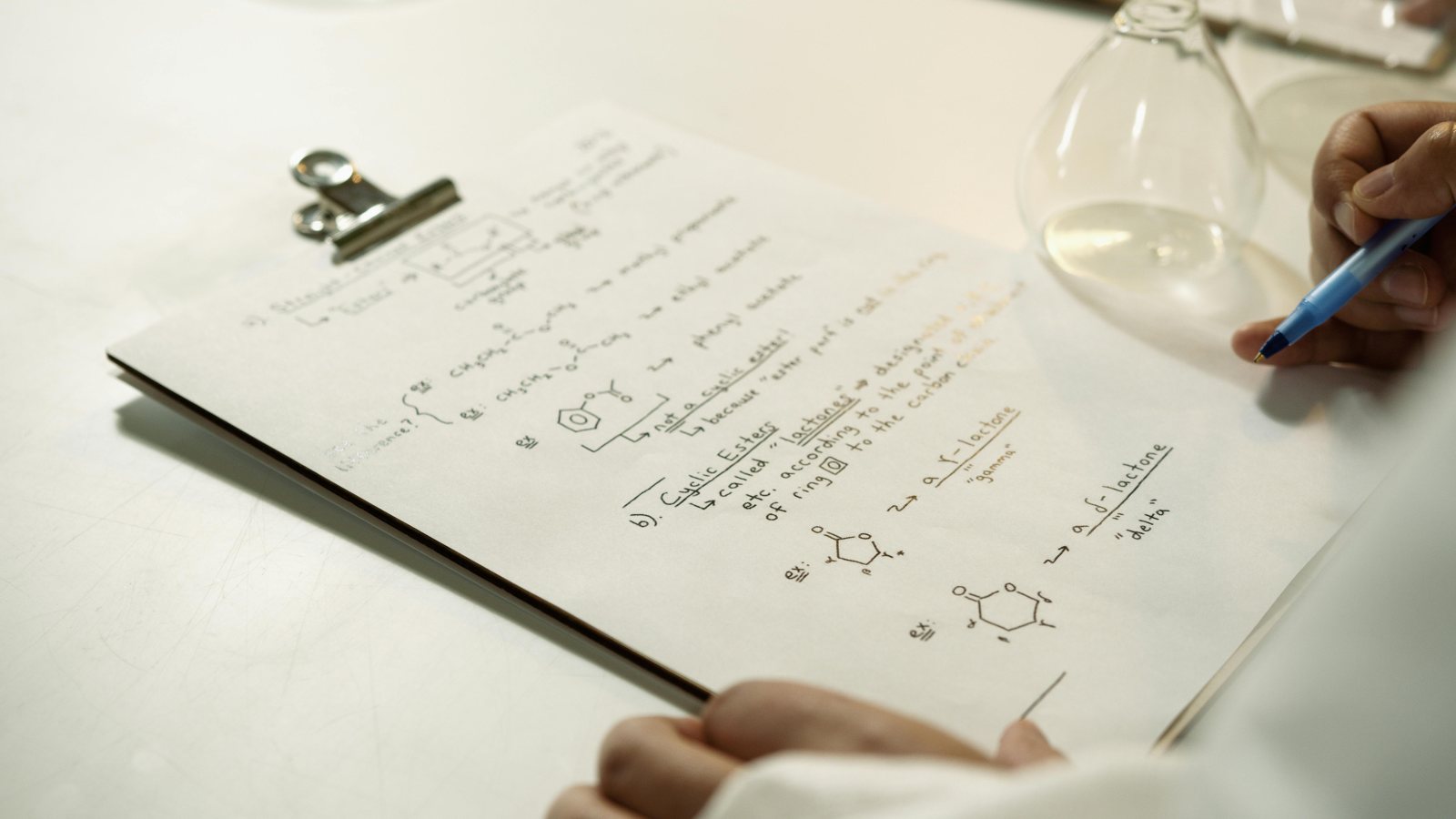
If you want to know how to study for a chemistry test in two weeks, start with a 15-minute quiz, not a reread of the whole unit. A short quiz can show whether you need to relearn a concept, practice a calculation, or get better at choosing a method without a chapter heading to guide you. Use what you find to decide where your study time goes.
Day 1: Take a short diagnostic quiz
Use your teacher's review sheet, assigned problems, or past quizzes to pick six questions. Cover several topics that will actually be tested. Include a short explanation, a calculation, and a question that asks you to read a graph, table, or chemical equation if those formats are on your test. For a unit on reactions, you might balance an equation, use a balanced equation to find a mole ratio, and explain what that ratio means. Choose questions you have not just reviewed, and make sure you have reliable answers to check afterward.
Work without notes and use only tools you expect to have on the test, such as a calculator or a periodic table. Put a star beside any answer you guessed. When you check your work, sort topics into three groups: ready if you answered correctly and can explain why, shaky if you guessed or made a mistake you can now fix, and weak if you could not start or cannot explain the solution. One question gives you a clue, not a verdict. If a result surprises you, try a second question on that topic before rearranging your plan.
How to study for a chemistry test in two weeks
Pick two priorities from your weak list. If one skill supports several others, put it first. For instance, if you struggle both to balance equations and to use them in calculations, work on balancing first. Call your priorities Topic A and Topic B. Keep the rest of the test in view by including stronger topics in mixed sets rather than giving every chapter its own day.
For an ordinary session, try 30 minutes: spend 5 recalling earlier material without notes, 20 solving problems, and 5 checking your work and choosing a question to retry later. When you cannot start a problem, study one worked example, cover it, and solve a similar problem on your own. The point is to find out what you can do when the example is no longer in front of you. If you need fresh questions, check your class materials first, then look through the IChC chemistry learning resources for material that matches your test.
Days 2 to 7: Fix weak topics and revisit them
- Day 2: Work on Topic A. After reviewing one example, solve two fresh problems. Write a sentence explaining why your first step makes sense.
- Day 3: Work on Topic B. End with one short Topic A question from memory, and check your answer only after you commit to it.
- Day 4: Return to Topic A with a different question format. If you practiced calculations, try explaining the same idea in words or interpreting it in a diagram.
- Day 5: Return to Topic B. Mix in a question from a stronger topic so you have to recognize which method to use rather than assuming every problem works the same way.
- Day 6: Solve a short mixed set without notes. Mark which problems you could start independently. For any you could not start, write down the clue you missed.
- Day 7: Retest your two priorities with fresh questions. If one now feels ready and your work confirms it, move that topic into mixed practice and use its study block for the next weak topic.
Returning to a topic across several days is spaced practice. Trying to produce an answer before looking it up is retrieval practice. You can do both with a single question: solve it today, then solve a similar one a few days later without your notes. The Learning Scientists' study guides explain both techniques.
Days 8 to 14: Mix topics and practice under time limits
- Day 8: Use your Day 7 results to choose the skill that still needs work. Practice it on its own, then try it again in a mixed set.
- Day 9: Cover topics that have received little attention. Include any explanation or data-reading questions you have been putting off.
- Day 10: Build a practice test from unused questions or use a teacher-provided one. Match your exam's topic mix and question formats as closely as you can. Keep the answers separate.
- Day 11: Take the practice test with a timer and the tools allowed on the real test. If you only have half the available time, use a shorter set with roughly half the workload.
- Day 12: Grade the test. Separate errors you made on attempted questions from questions you did not reach. Try one unfinished problem without a timer to see whether you know how to solve it when time is not the constraint.
- Day 13: Practice the most useful fix from Day 12. If you spent too long on one problem, try a short timed set in which you skip a stalled problem and return to it after easier ones.
- Day 14: Keep the review light. Recall key relationships without notes, check them, and solve one familiar problem. If this is test day, do that brief review only if you have time.
Adjust the plan when you fall behind
Don't stack two full sessions onto tomorrow. If you miss Day 4, for example, replace the stronger-topic question on Day 5 with one Topic A question and keep the rest of Day 5 as planned. If you miss several days, do a three-question check on the topics you were supposed to cover. Keep the highest-priority weak topic, combine the rest into a mixed set, and shorten the timed review rather than cutting it. Leave at least one session after the timed set to correct mistakes.
If you have only 10 minutes tonight, solve one question on a weak topic without notes. Check it, write down the first step you would change, and schedule a similar question for your next session. If you need one, look for a suitable problem in the IChC training and practice materials.
Frequently asked questions
How long should I study chemistry each day?
Try 30 focused minutes on ordinary days, with a longer block for your timed practice test if your schedule allows. A short session spent solving and checking problems can still be useful.
What if I don't have a practice test?
Build one from unused homework, textbook, or review questions. Match the topics and formats your teacher expects, and save the answer key until the timer ends.
Should I start over if I miss two days?
No. Use a few questions to check what still needs work, then carry the weakest high-priority topic into your next session. Keep a timed set and a chance to review it.
About the International Chemistry Competition: an online chemistry competition for high school students from around the world. Qualification Round 2027: submissions are open until Sunday, 3 January 2027. How the rounds work