Julia Berens
Julia Berens, Social Media Assistant of the IChC. Articles on the IChC Blog.
Topics: All articles | Chemistry Explained | Exam Preparation | Problems and Solutions | Studies and Careers | Competition News
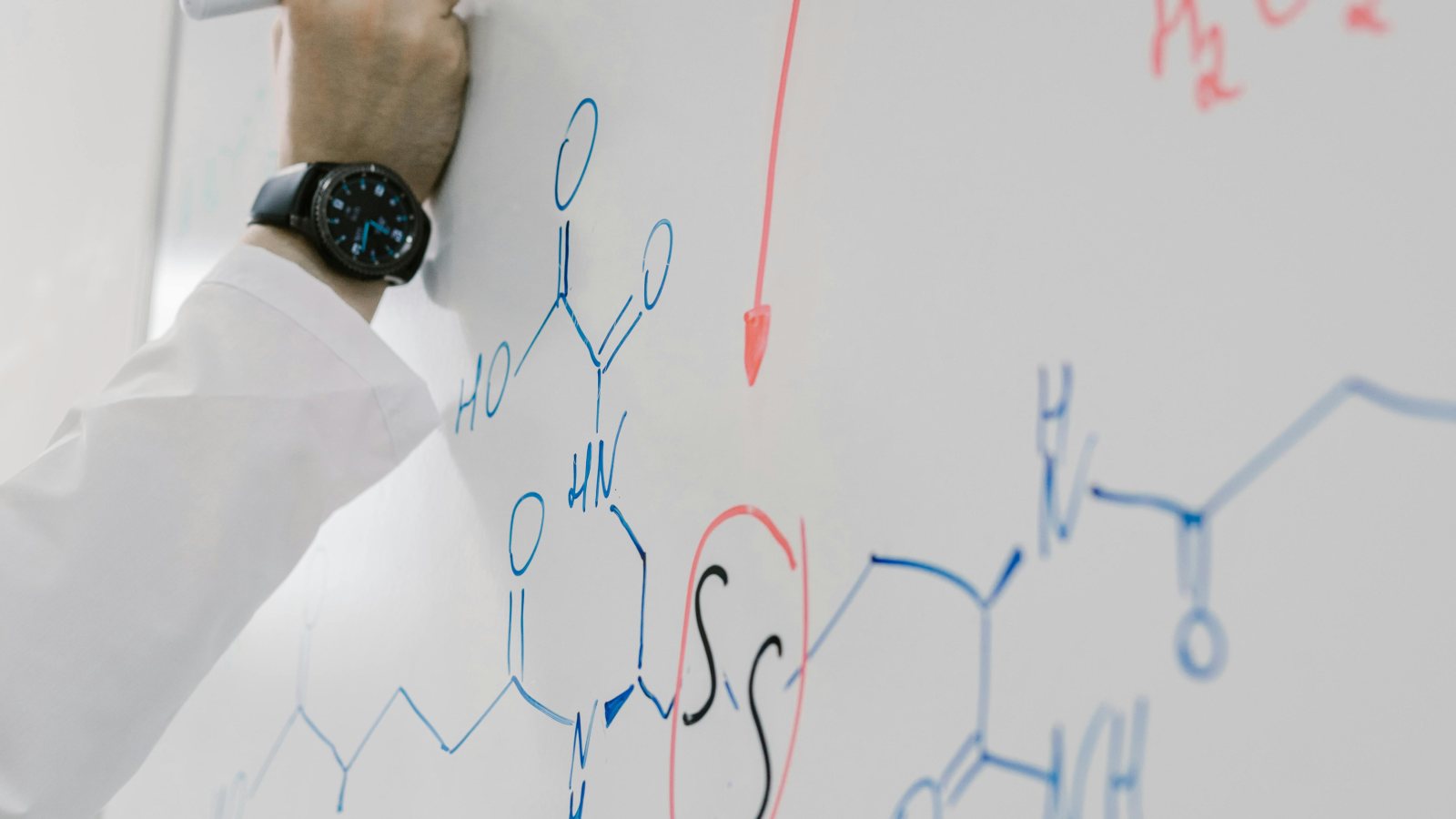
Why Is CO2 Nonpolar? Draw the Dipole Arrows
Draw two arrows for carbon dioxide and two for water. Adding them shows why the same number of polar bonds can give different results. Read more
Why Do Ionic Compounds Conduct Electricity?
Solid salt, molten salt, and saltwater all contain ions. The difference is whether those ions can move through the sample and carry an electric current. Read more
How to Avoid Careless Mistakes in Chemistry Exams
A marked test can show you where your work first went wrong. Use those clues to build a checklist that catches repeat mistakes. Read more

How Does a Galvanic Cell Work? Follow the Charge
A zinc and copper cell has two paths for charge. Use the half-reactions to predict which way electrons travel in the wire and which way ions move in the salt bridge. Read more

Does IChC Give Certificates for Participation and Awards?
You do not have to reach the Final Round to earn an IChC participation certificate. Find out where to look for yours and which prize winners receive hard copies. Read more
How to Answer Chemistry Multiple Choice Questions
Read the choices before reaching for your calculator. A unit, a sign, or a rough estimate can rule out wrong answers and save time for harder problems. Read more
How Does a Catalyst Speed Up a Reaction?
Compare two paths on an energy diagram to see what a catalyst changes, what it leaves alone, and how to read the reverse barrier. Read more
How to Submit IChC Solutions for the Qualification Round
Type your solutions or photograph your handwritten work. Then put the pages in order and check the finished file before you upload it. Read more

What Does an Environmental Chemist Do With a Water Sample?
Follow a stream sample from the field to the lab report, and see how high school courses and college labs can prepare you for environmental chemistry. Read more
How to solve stoichiometry problems by tracking units
Write the units before you reach for your calculator. A worked example shows how to choose each conversion factor and catch a flipped mole ratio. Read more

How Do Buffers Work in Chemistry? An Acetate Example
Follow the numbers in an acetic acid and acetate buffer to see why a small dose barely moves the pH and why a larger dose can overwhelm it. Read more
IChC Age Groups Explained by Age and Grade
A 15-year-old in 11th grade and a 16-year-old in 10th grade both compete as Youth. See how age, grade, and gap-year status determine your group. Read more
Page 1 of 2 | Older articles ›